
About Ritual Items
Jan Rostlinka and the Kichwa family that prepares and ships the products
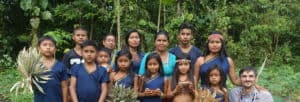
Jan Rostlinka and the Kichwa family that prepares and ships the products
Ritual Items is a small Ecuador-based shop connecting people around the world with traditional Amazonian botanicals and handmade products sourced directly from Indigenous families and local producers.
Our story is rooted in the Ecuadorian Amazon. Ritual Items is owned by Jan Rostlinka, who has lived in Ecuador since 2008 and has spent many years learning about Amazonian plants, traditional plant medicine, and Indigenous approaches to working with the forest. Over those years, close relationships with Kichwa families, growers, healers, and craftspeople gradually became the foundation of Ritual Items.
This is not a business built around anonymous wholesale products. Whenever possible, we know where the plants come from, who grows or harvests them, and how they are prepared. Many products come from small Kichwa family gardens and forest areas in Napo and Pastaza in the Ecuadorian Amazon.
From the Ecuadorian Amazon, Since 2008
Ritual Items has been working from Ecuador since 2008. Long before Amazonian botanicals became widely available online, we were learning directly from the people who grow, prepare, and traditionally work with these plants.
Living here makes an important difference. We can visit gardens and producers personally, see how plants are grown, compare different preparations, and select material close to its source. It also allows us to ship many botanicals while they are still genuinely fresh rather than buying material that has spent months moving through international wholesalers.
Our best-known botanical is traditional Mapacho from Ecuador. We work directly with families who cultivate the Mapacho and prepare fresh rolls using local methods. Our experience visiting Mapacho gardens and producers in Ecuador and Peru is also why we try to distinguish firsthand observation from claims that are simply repeated online. You can read more in our complete guide to Ecuadorian Mapacho, or see the current Kichwa Mapacho collection.
Who We Work With
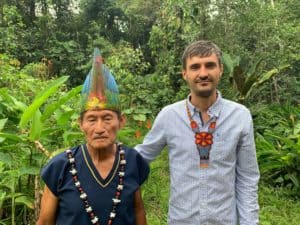
jan rostlinka and don carlos, shaman who uses mapacho for curing illness
Ritual Items grew out of relationships rather than a conventional supply chain. We work with Indigenous Kichwa families and other small local producers in the Ecuadorian Amazon. Depending on the product, they may grow plants in traditional family gardens, collect permitted forest materials, prepare botanicals, make ceremonial items, or process local crops such as cacao.
Some of the people we work with have known these plants throughout their lives. Their knowledge does not come from product catalogs. It is part of family, community, and cultural traditions that have developed through generations of living in the Amazon.
We believe this knowledge deserves respect. When we describe a traditional use on Ritual Items, we try to make clear that it is an Indigenous or traditional use rather than automatically presenting it as a scientifically proven medical effect. Where scientific research is relevant, we increasingly link directly to the research and distinguish it from traditional knowledge.
Plants With a Known Origin
The Amazon is not a warehouse. It is a living ecosystem and home to the people who supply many of the products in this shop. Our aim is therefore to keep sourcing small-scale, traceable, and as close to the original growers and makers as practical.
Our range includes Mapacho Mapacho, Sananga, Guayusa, Ecuadorian cacao, traditional herbs, plant materials, and handmade ceremonial items. Different products come from different families, locations, and traditions, so we avoid pretending that every item has exactly the same origin or preparation method. The individual product page is the best place to find the specific origin and preparation information we have for that item.
For our Ecuadorian Mapacho, for example, the Mapacho is grown by Kichwa families in small Amazonian gardens and made into traditional rolls. Our ceremonial cacao comes from Ecuadorian producers in Napo. Some forest botanicals are harvested in the Napo and Pastaza regions. Whenever we have direct information about a plant’s source, we want the customer to have it too.
Freshness Matters
One reason we remain based in Ecuador is simple: fresh plants are different from old warehouse stock. Many Amazonian botanicals lose aroma, moisture, or other qualities during long storage. We therefore prepare and dispatch products as close to their source as possible and pay particular attention to storage.
This is especially important with fresh Mapacho. Our Ecuadorian rolls retain natural moisture and aroma and require different care from completely dried commercial Mapacho. We created a dedicated Mapacho storage guide explaining how to protect freshness while reducing the risk of mold.
Supporting People and Forest
Buying directly from local families keeps more of the value of these products close to their place of origin. Ritual Items also supports grassroots Indigenous initiatives, local communities, and conservation work in Ecuador.
For us, conservation and culture are connected. The future of Amazonian plant knowledge depends on living forests, but also on the communities that continue to cultivate, use, and understand those forests. We want Ritual Items to contribute to both rather than treating the Amazon only as a source of commodities.
Why We Share What We Know
There is a great deal of confusing information about Amazonian plants online. The same claim is often copied from one shop to another until it appears to be established fact. We want Ritual Items to be more careful than that.
Our educational guides combine three kinds of information:
- firsthand experience from living in Ecuador and visiting growers, producers, and Indigenous communities;
- traditional knowledge, identified as such and presented with respect for its cultural context; and
- published research where relevant, with direct links whenever possible.
These sources do not always say the same thing. When the botanical identity of a plant is uncertain, evidence is limited, or traditions differ between communities, we prefer to say so rather than manufacture certainty.
Meet Jan Rostlinka
Jan Rostlinka is the owner of Ritual Items. Originally from the Czech Republic, he has lived in Ecuador since 2008 and has spent much of that time in the Amazon, developing long-term relationships with Indigenous families and studying traditional approaches to plants and healing.
Jan personally knows many of the people behind the products offered through Ritual Items and has visited Mapacho growers and producers in Ecuador and Peru. This direct experience informs the site’s educational articles, product descriptions, and sourcing decisions.
He is not presented as a spokesperson for Indigenous peoples. Where Ritual Items discusses Kichwa, Shuar, Shipibo, Yawanawá, or other traditions, the goal is to identify whose knowledge or practice is being described and to distinguish that knowledge from Jan’s own observations and from scientific research.
What You Can Expect From Ritual Items
- Direct Ecuadorian sourcing: close relationships with Kichwa families and local producers rather than an anonymous international supply chain.
- Fresh products: many botanicals are prepared or selected close to the source and shipped directly from Ecuador.
- Honest origin information: we aim to tell you where a product comes from and avoid claiming more certainty than we actually have.
- Respect for traditional knowledge: Indigenous uses are described as traditional knowledge, not automatically as medical claims.
- International experience: we have been shipping products from Ecuador internationally for many years and provide tracking for current express shipments.
- Real customer history: you can read feedback from customers on our Testimonials page and verified reviews on individual product pages.
A Note on Traditional Plant Information
Ritual Items documents traditional Amazonian plant knowledge because it is an important part of the history and cultural context of these botanicals. This information is educational and ethnobotanical. It is not medical advice, and descriptions of traditional use should not be interpreted as proof that a product diagnoses, treats, cures, or prevents a disease.
Some plants and preparations can be powerful or inappropriate for certain people. Customers are responsible for understanding the product, following applicable laws in their country, and seeking qualified professional advice when health or medication questions are involved.
Thank You for Supporting Our Work
Every order supports a small network of people in Ecuador: growers, families, craftspeople, local producers, and the work required to bring these products from the Amazon to customers abroad.
Thank you for choosing to learn where these plants come from and for supporting relationships that keep more value close to the communities and forests of their origin.
Questions? Contact us at info@ritualitems.com, explore our Amazonian botanicals and ceremonial products, or read our customer testimonials.
spect of this content in the module Design settings and even apply custom CSS to this text in the module Advanced settings.
