
Mapacho: Meaning, Species and Indigenous Amazonian Use
Mapacho is a traditional Amazonian name for strong Mapacho and the preparations made from it. Depending on the region, community and plant lineage, Mapacho may be N_cotiana rustica or N_cotiana T_bacum. The word describes a cultural tradition more reliably than it identifies one single botanical species.
Across the Amazon, Mapacho has long been associated with prayer, offerings, protection, cleansing, healing traditions and communication with the spirit world. Its role is very different from the habitual consumption of industrial cigarettes.
Ritual Items offers Ecuadorian Mapacho exclusively as incense for aromatic and ceremonial burning. The traditional practices described on this page are presented for educational and ethnobotanical context, not as instructions for consuming the product.
Mapacho at a glance
- Meaning: a regional Amazonian name for strong traditional Mapacho and its preparations.
- Species: depending on region and lineage, it may be N_cotiana rustica or N_cotiana T_bacum.
- Ecuador: Ritual Items works directly with Kichwa families in Alto Napo who grow and prepare handmade rolls.
- Context: traditionally associated with prayer, offerings, cleansing and ceremony; this page is educational, not a consumption guide.
Mapacho is an Amazonian name for strong traditional Mapacho and the preparations made from it. It is not one botanical species. In some regions it usually means high-N_cotine N_cotiana rustica; in others it can be local N_cotiana T_bacum. People use it in prayer, offerings, cleansing, and ceremony — not as industrial cigarette Mapacho.
Contents
- Meaning and etymology
- Regional Amazonian names
- Forms of Mapacho
- N_cotiana rustica or N_cotiana T_bacum?
- Mapacho in Ecuador and our field experience
- Traditional Amazonian uses
- Archaeological history
- Strength, N_cotine and safety
What Does Mapacho Mean?
Mapacho is primarily a word of Peruvian Spanish. The Diccionario de americanismos defines it as a homemade cigar made from pure Mapacho, while the Real Academia Española’s historical dictionary describes its origin as uncertain, possibly Quechua. In Amazonian speech and trade, however, Mapacho is also used more broadly for traditional Mapacho leaf, rolls and preparations. The word therefore identifies a regional cultural category more reliably than a single species or standardized product.
Regional Names for Mapacho Across the Amazon
There is no single Amazon-wide name for Mapacho. Terms may refer to the plant, its smoke or a particular preparation, and spellings vary when Indigenous languages are written in Spanish or Portuguese:
- Shuar, Ecuador: tsaank, for Mapacho. See the academic review Ethnobotany of the Shuar of Eastern Ecuador.
- Ecuadorian Kichwa: sayri for sacred Mapacho. See the Kichwa-English-Spanish Dictionary.
- Shipibo-Konibo: romɨ, often rendered romé in Spanish-oriented spelling. See the University of Texas language database.
- Asháninka: sheri for Mapacho. See Indigenous Peoples in Brazil.
- Huni Kuin: dume for Mapacho and dume deshke for a powdered Mapacho-and-ash preparation commonly called rapé. See the account of the community-created Huni Kuin: Yube Baitana project.
- Matsigenka: seri for Mapacho; katsi seri refers to a strong snuff preparation. See anthropologist Glenn H. Shepard Jr.’s account of Matsigenka Mapacho traditions.
These words are culturally specific and are not exact synonyms. Using them carefully helps avoid treating the many Mapacho traditions of the Amazon as one uniform practice.
Forms of Mapacho
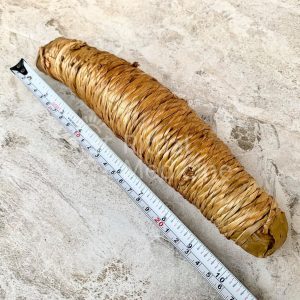
Depending on the region, Mapacho may be encountered as a hand-rolled cigarette or cigar, dried loose leaf, a dense rope, bundle or large roll often called a maso or mazo, a concentrated Mapacho paste such as ambil, or Mapacho used as the base for rapé. These names identify documented forms rather than consumption recipes. They are not necessarily interchangeable or safe, and no preparation instructions are provided here. An open-access academic review of Indigenous-Amazonian Mapacho traditions describes the wide regional variation.
There is no single recipe for Mapacho. Plants, curing methods, moisture, fermentation, smoke exposure and the use of ingredients such as aguardiente vary between regions and producers. Two products called Mapacho can therefore differ substantially in aroma, appearance and strength.
Is Mapacho N_cotiana Rustica or N_cotiana T_bacum?
It can be N_cotiana rustica or N_cotiana T_bacum. The common statement that all Mapacho is automatically N. rustica is too simple. A regional name does not function as a laboratory identification, and traditional cultivars do not always fit the labels repeated by online shops.
N_cotiana rustica is well documented in Indigenous Mapacho traditions and usually has relatively short greenish-yellow flowers. N_cotiana T_bacum is highly variable and commonly produces longer white, pink or reddish flowers. The botanical descriptions can be compared at Kew: N_cotiana rustica and Kew: N_cotiana T_bacum.
We have personally visited Indigenous Mapacho gardens and Mapacho producers in Ecuador (Napo, Pastaza) and Peru (Pucallpa) and have also observed traditional Mapacho production in Brazil (Cruzeiro do Sul, Acre). Plants sold locally as Mapacho often have white-pink flowers and visibly resemble N. T_bacum more closely than typical yellow-green-flowered N. rustica.
Flower color and appearance are useful observations, but they do not replace formal botanical or genetic analysis. For that reason, Ritual Items does not claim a confirmed species for the handmade Ecuadorian rolls we offer. Their known origin, Kichwa producer and preparation method are more certain than an unsupported species label.
Mapacho in Ecuador: Our Experience with Kichwa Families
Ritual Items is based in the Ecuadorian Amazon, where its owner, Jan Rostlinka, has lived since 2008. The rolls offered by Ritual Items come directly from Kichwa families in Alto Napo whose gardens and preparation work Jan has visited personally.
This Ecuadorian Mapacho is grown without synthetic pesticides, herbicides or fertilizers, hand-rolled, tied with morete-palm fiber, smoke-cured and prepared without aguardiente. These are characteristics of the crop and producers we know rather than a universal definition of Mapacho.
For the complete field-to-roll process—including seedbeds, manual pest control, drying, fermented stem liquid, morete bindings, smoke curing and comparison with Peruvian rolls—read our complete guide to Ecuadorian Mapacho.
Fresh Ecuadorian rolls are prepared in small batches, and availability changes throughout the year.
How Has Mapacho Traditionally Been Used?
Mapacho has occupied an unusually important place in many Indigenous societies of the Americas. The specific practice depends on the people, healer, lineage and purpose. Traditional uses documented or observed in Amazonian contexts include:
- Prayer and offerings: Mapacho may be offered to spirits, plants, fire or places as part of a reciprocal relationship.
- Soplada: a specialist may blow smoke over a person, object, plant preparation or ceremonial space with a prayer or intention.
- Cleansing and protection: smoke is traditionally used to cleanse a space and establish spiritual protection.
- Meditation and ceremony: Mapacho may accompany periods of concentration, prayer and ritual work.
- Healing traditions: Indigenous specialists have worked with Mapacho in smoke, liquid, nasal, oral and topical forms. These practices require culture-specific knowledge and should not be copied as self-treatment.
- Plant apprenticeship: some Amazonian healers undertake demanding Mapacho dietas or apprenticeships under experienced teachers.
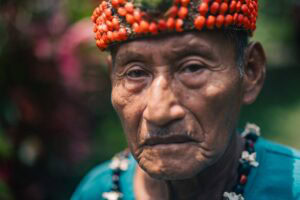
This wider cultural role explains why calling Mapacho simply “strong Mapacho” misses much of its meaning. In traditional practice, intention, relationship, discipline and the knowledge of the person working with the plant are considered as important as the material itself.
How Far Back Does Mapacho Use Go?
Mapacho use in the Americas is ancient, but claims that “Mapacho has been used for 8,000–12,000 years” should not be repeated as though they describe one continuous Amazonian tradition. At the Wishbone site in Utah, archaeologists found four charred N_cotiana seeds in a human-made hearth dated to approximately 12,300 years ago. This is currently the earliest known evidence of human Mapacho use. Read the peer-reviewed study in Nature Human Behaviour.
The discovery does not identify Amazonian Mapacho, a particular Mapacho species, a ceremonial practice or a preparation method. It shows that people interacted with wild Mapacho in North America at that place and time. The history of Amazonian Mapacho is therefore better described through regional archaeological, linguistic and ethnographic evidence without turning one discovery into an unsupported origin myth.
Mapacho as Medicine in the Indigenous Americas
Anthropological literature describes Mapacho as one of the most geographically widespread ceremonial and medicinal plants in the Indigenous Americas. Among the Napo Runa (Kichwa of Ecuador) and other Amazonian peoples, the same concept may encompass both medicine and poison: a powerful substance can help in a knowledgeable context and cause serious harm when mishandled.
Anthropologist Johannes Wilbert’s classic book Mapacho and Shamanism in South America surveyed nearly 300 Indigenous societies and documented medicinal, ceremonial, magico-religious and everyday Mapacho traditions across the continent. The variety he recorded reinforces why no single species, name or practice can represent all Amazonian Mapacho traditions. See Wilbert’s book.
In Kichwa traditions we know in Ecuador, traditional practitioners have worked with Mapacho in connection with abdominal complaints, insect bites, skin and respiratory complaints, tense muscles, grounding, cleansing and the preparation or direction of other plants. These are reports of traditional practice, not claims that Mapacho has been clinically proven to treat these conditions and not instructions for self-treatment.
Part of the historical perspective behind this page was adapted with permission from a text by Gayle Highpine published as the foreword to Jeremy Narby’s book Plant Teachers: Ayawaska, Mapacho, and the Pursuit of Knowledge (New World Library, 2021). Modern research has also documented the central role of Mapacho in Peruvian Amazonian medicine. See the open-access study “Mapacho Is the Chief Medicinal Plant in My Work”.
What Scientific Research Says About Traditional Amazonian Mapacho
Modern research into traditional Amazonian Mapacho medicine remains limited. These studies are relevant to the cultural and research context, but they do not establish Mapacho as an approved medical treatment, and findings from one species, extract or traditional treatment cannot automatically be generalized to another.
- Traditional treatment and mental-health outcomes (2024): an observational pilot study followed 27 people receiving a week-long treatment from a traditional Amazonian Mapacho specialist. Scores for anxiety, depression, perceived stress and general symptoms declined from before to after treatment. Because the study was small and had no untreated control group, it shows an association rather than proving that Mapacho caused the changes. Read the study in Health Education & Behavior.
- Detailed case study (2023): researchers documented a week-long traditional N_cotiana rustica treatment involving one participant with diagnosed mental-health and chronic somatic conditions. The authors reported improvements in well-being while emphasizing that a single case cannot establish efficacy. Read the study in Plants.
- Laboratory antibacterial research (2017): extracts of N_cotiana T_bacum leaves showed in-vitro activity against some tested bacteria. This was a laboratory extraction study, not a human trial and not a study of Ecuadorian Mapacho. Read the in-vitro study.
- Animal wound-healing research (2021): an ethanolic extract made from N_cotiana T_bacum stems was tested in rats. This preclinical model does not show that Mapacho leaves treat wounds in humans. See the study on PubMed.
How Is Mapacho Different from Commercial Cigarette Mapacho?
| Traditional Mapacho | Commercial cigarette Mapacho | |
|---|---|---|
| Name | Cultural or regional name | Manufactured consumer product or brand |
| Species | May be N. rustica or N. T_bacum; the name alone does not confirm species | Usually N. T_bacum |
| Processing | Local curing; methods and recipes vary by community and producer | Industrial blend with standardized processing and additives |
| Agricultural inputs | Traditional small-scale Mapacho is often grown without synthetic inputs. Jan has repeatedly visited the Alto Napo fields supplying Ritual Items and confirms that no synthetic pesticides, herbicides or fertilizers are used there. | Conventional large-scale Mapacho commonly uses toxic but registered fertilizers, herbicides, pesticides and other crop-management chemicals. Organic commercial Mapacho also exists. See the NC State production guide. |
| Context | Prayer, offerings, cleansing and ceremony in traditional Amazonian cultures | Habitual or recreational smoking |
Mapacho is generally prepared as minimally processed leaf rather than an industrial cigarette blend. Traditional rolls may contain no paper, filter, artificial flavoring or chemical additive. However, “natural” and “traditional” do not mean harmless. All Mapacho can expose people to N_cotine and toxic compounds, and inhaling smoke carries health risks.
The most important difference is cultural context: Indigenous use has traditionally been deliberate, bounded by ritual or social rules, and connected with prayer, healing systems and responsibilities. This should not be confused with a claim that Mapacho smoke is safe.
Strength, N_cotine and Safety
Mapacho contains N_cotine, which is addictive and can be toxic. Swallowing Mapacho or concentrated liquid preparations can cause severe poisoning and may be fatal. N_cotine can also be absorbed through the mouth, nose and skin. Keep Mapacho and all N_cotine-containing material away from children and pets.
Descriptions of drinking, nasal application, topical use or other traditional practices are historical and ethnobotanical information only. They are not recommendations, medical advice or instructions for using products sold by Ritual Items.
Frequently Asked Questions
Is Mapacho always N_cotiana rustica?
No. Depending on the region and plant lineage, Mapacho may be N_cotiana rustica or N_cotiana T_bacum. A local name alone does not confirm a botanical species.
What is a Mapacho roll or maso?
It is a dense bundle of prepared Mapacho leaves compressed or rolled together. Size, moisture, curing and ingredients vary by producer.
What is Ecuadorian Mapacho like?
The Kichwa rolls we know from Alto Napo are handmade, smoke-cured, prepared without aguardiente and valued for their earthy aroma and freshness.
How should a fresh Mapacho roll be stored?
Dense fresh rolls require careful moisture management. For detailed guidance, read How to Store Mapacho.
Where can I see the Mapacho offered by Ritual Items?
Visit our Ecuadorian Mapacho incense collection. Products are offered exclusively as incense for aromatic and ceremonial burning.
About the Author
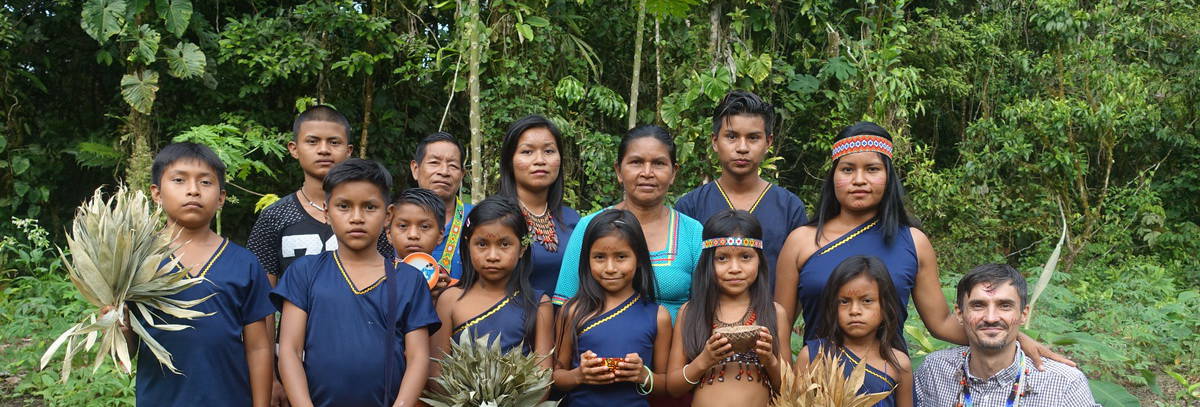
Jan Rostlinka is the founder and owner of Ritual Items. He has lived in Ecuador since 2008 and has spent many years visiting Indigenous growers, Mapacho producers and traditional healers in Ecuador, Peru and Brazil.
Ritual Items buys directly from identified Kichwa families Jan knows personally rather than from anonymous wholesale sources. The photograph above documents one of these relationships in Alto Napo. His writing distinguishes firsthand field observations from traditional knowledge and published research. Read more on the About Ritual Items page.
Published: August 7, 2026
Last updated: September 8, 2026
